Premium export product by rajendra traders
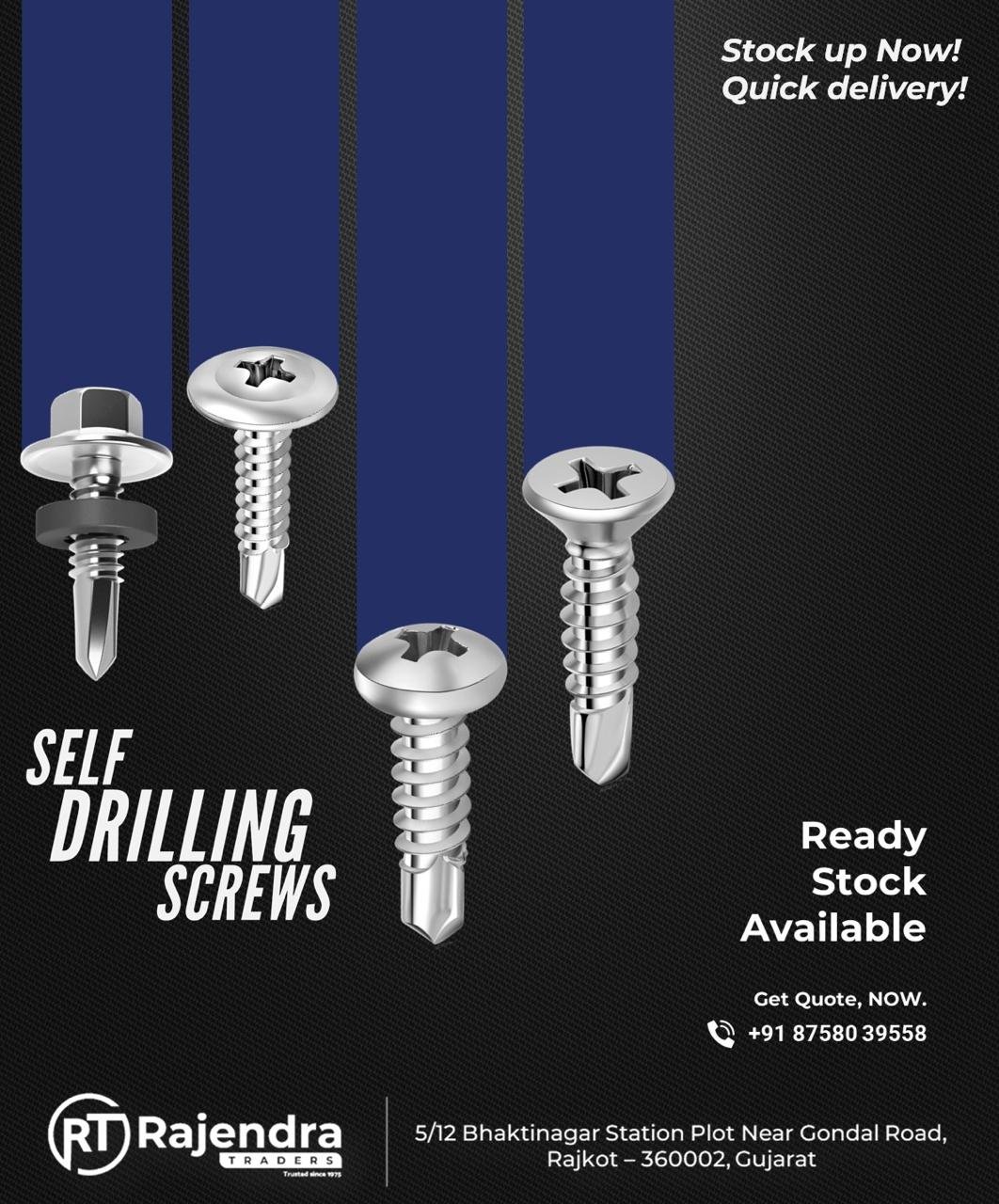
Product Specification :
Product Specification: Self-Drilling Screws (TEK Screws)
Self-drilling screws, commonly known by the brand name TEK screws, are specialized fasteners that feature a point shaped like a drill bit. Unlike self-tapping screws (which require a pilot hole), self-drilling screws perform three operations in a single motion: drilling, tapping, and fastening.
1. Anatomy of a Self-Drilling Screw
Drill Point: The tip of the screw. The length of this point determines the thickness of the metal the screw can penetrate.
Flutes: The grooves in the drill point that allow metal shavings (swarf) to escape during the drilling process.
Leading Threads: These begin immediately after the drill point to engage the material as soon as the hole is formed.
2. Common Point Sizes
The "Point Number" indicates the drilling capacity (the maximum thickness of the metal it can pierce):
Point Size Drilling Capacity (Typical) Common Application
Point #2 Up to $3.0\text{mm}$ Thin sheet metal, HVAC ducting.
Point #3 Up to $5.0\text{mm}$ Standard steel purlins and framing.
Point #4 & #5 Up to $12.5\text{mm}$ Heavy structural steel and hot-rolled beams.
[Image comparing different TEK screw point sizes from #2 to #5]
3. Head Styles and Drives
Hex Washer Head (HWH): The most common for roofing and siding; provides a large bearing surface for high torque.
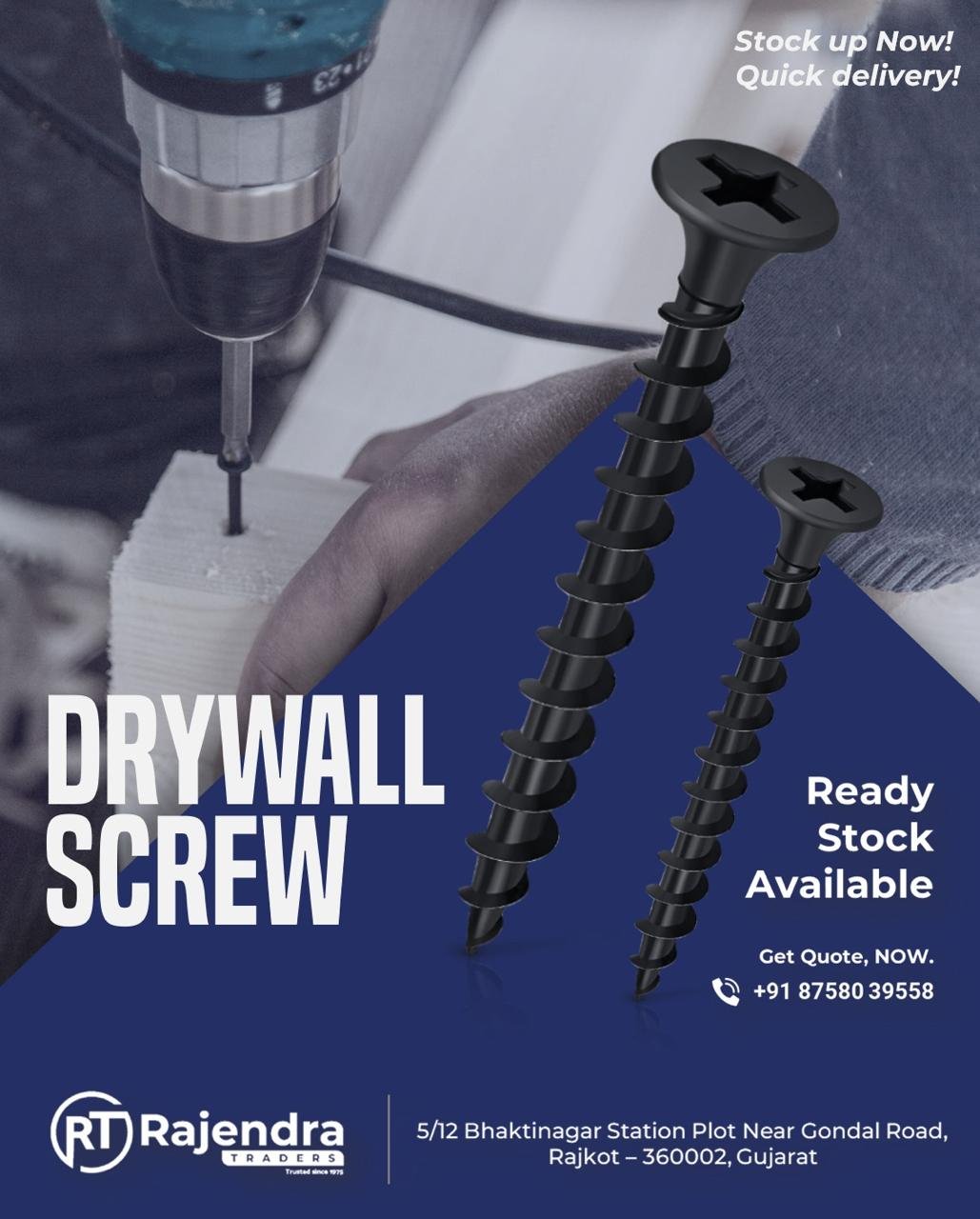
Wafer Head: Low-profile, flat head used when a flush finish is needed (e.g., behind drywall).
Pan Head: Rounded top with a flat underside; common in electronics and general assembly.
Countersunk (CSK): Designed to sit flush with the material (often used for wood-to-metal applications).
4. Material and Coating
Feature Specification
Base Material Case-hardened Carbon Steel (standard) or 410 Stainless Steel.
Coating (Standard) Zinc Plated (Indoor) or Yellow Zinc.
Coating (Premium) Ruspert or Climaseal (1000+ hour salt spray rating for outdoor/roofing).
Bi-Metal Features a stainless steel body with a carbon steel drill tip welded on (combines corrosion resistance with drilling power).
5. Technical Specifications
Thread Pitch: Usually fine threads for metal-to-metal and coarse threads for metal-to-wood (wing-teks).
EPDM Washers: Often supplied with a bonded rubber washer to create a water-tight seal for roofing applications.
Torsional Strength: Hardened steel is used to ensure the screw doesn't "snap" under the high friction of the drilling process.
6. Professional Installation Tips
RPM Matters: High-speed drills can burn out the drill tip before it penetrates.
Tip: Use lower RPMs ($1500\text{--}2500$) for thicker metals.
The "Wing-TEK" Rule: When fastening wood to metal, use screws with "wings." These wings ream a larger hole in the wood so the threads don't engage until they hit the metal, preventing the wood from "jacking" or lifting away from the steel.
Don't Over-Torque: If the EPDM washer is squashed flat or bulging out the sides, the screw is too tight and the seal may fail over time.
Contact our export experts for detailed specifications, pricing, and shipping information.
Contact rajendra traders