Premium export product by rajendra traders
Gemini said
Product Specification: Wire Nails
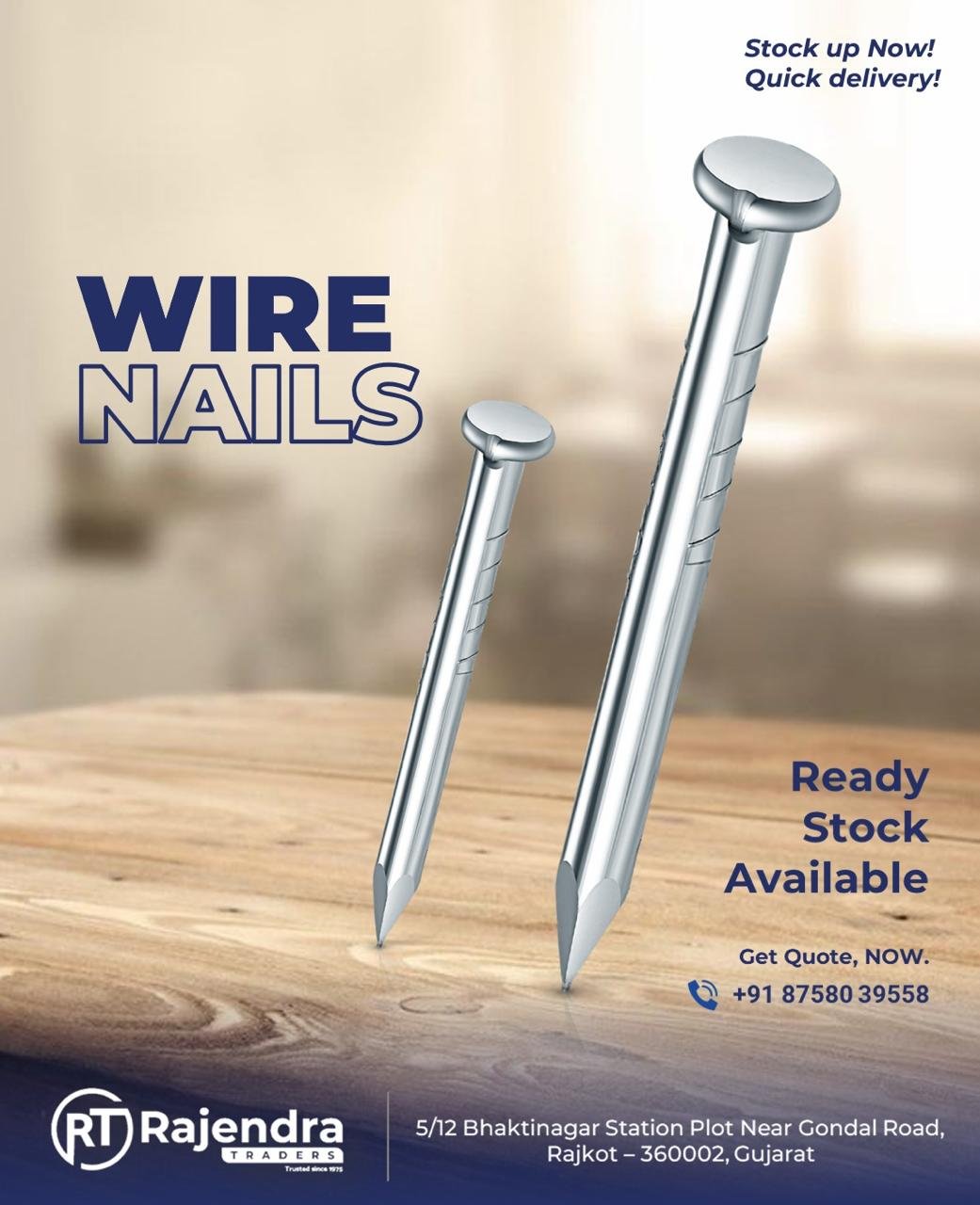
Wire Nails (also known as common nails) are the most widely used type of fastener in construction and woodworking. They are manufactured from coils of wire that are cut to length, headed, and pointed in a continuous automated process.
1. General Characteristics
Body (Shank): Typically smooth, though ring-shank (annular) or screw-shank versions exist for higher withdrawal resistance.
Head: Flat, circular, and usually textured with a "checker" pattern to prevent the hammer from slipping.
Point: Standard Diamond Point, designed to push wood fibers aside (though this can cause splitting in very dry or thin hardwoods).
2. Material & Finish
The finish determines where the nail can be used (indoor vs. outdoor):
Finish Specification Best Use
Bright Steel Untreated, polished steel. Indoor framing and general joinery (will rust if exposed).
Electro-Galvanized Thin zinc coating via electrolysis. Some moisture resistance; used for internal trim or temporary outdoor work.
Hot-Dipped Galv. Thick zinc coating (dipped in molten zinc). External use (fences, decks, roofing); high rust resistance.
Stainless Steel Grade 304 or 316. Marine environments or with corrosive woods like Cedar and Redwood.
3. Dimensional Standards
Nails are traditionally measured by length and "gauge" (thickness).
Metric: Defined by Length × Diameter (e.g., 50mm×2.65mm).
Imperial (Penny System): Designated by the letter "d" (e.g., 2d to 60d).
Common Sizes Reference:
2 inch (50mm): Common for light framing and crates.
3 inch (75mm): The standard "framing nail" for 2×4 lumber.
4 inch (100mm): Heavy-duty structural timber connections.
4. Key Performance Metrics
Tensile Strength: The wire used typically has a tensile strength of 600–700 N/mm
2
.
Ductility: A high-quality wire nail should be able to bend 90
without snapping.
Withdrawal Force: The amount of force required to pull the nail out; this increases significantly with the length and diameter of the shank.
5. Specialized Wire Nail Types
Clout Nails: Feature a very large, flat head; used for fixing roofing felt or plasterboard.
Lost Head (Brads): Feature a tiny head that can be punched below the wood surface for a hidden finish.
Panel Pins: Very thin wire nails used for delicate cabinet trim or thin veneers.
Contact our export experts for detailed specifications, pricing, and shipping information.
Contact rajendra traders