Premium export product by rajendra traders
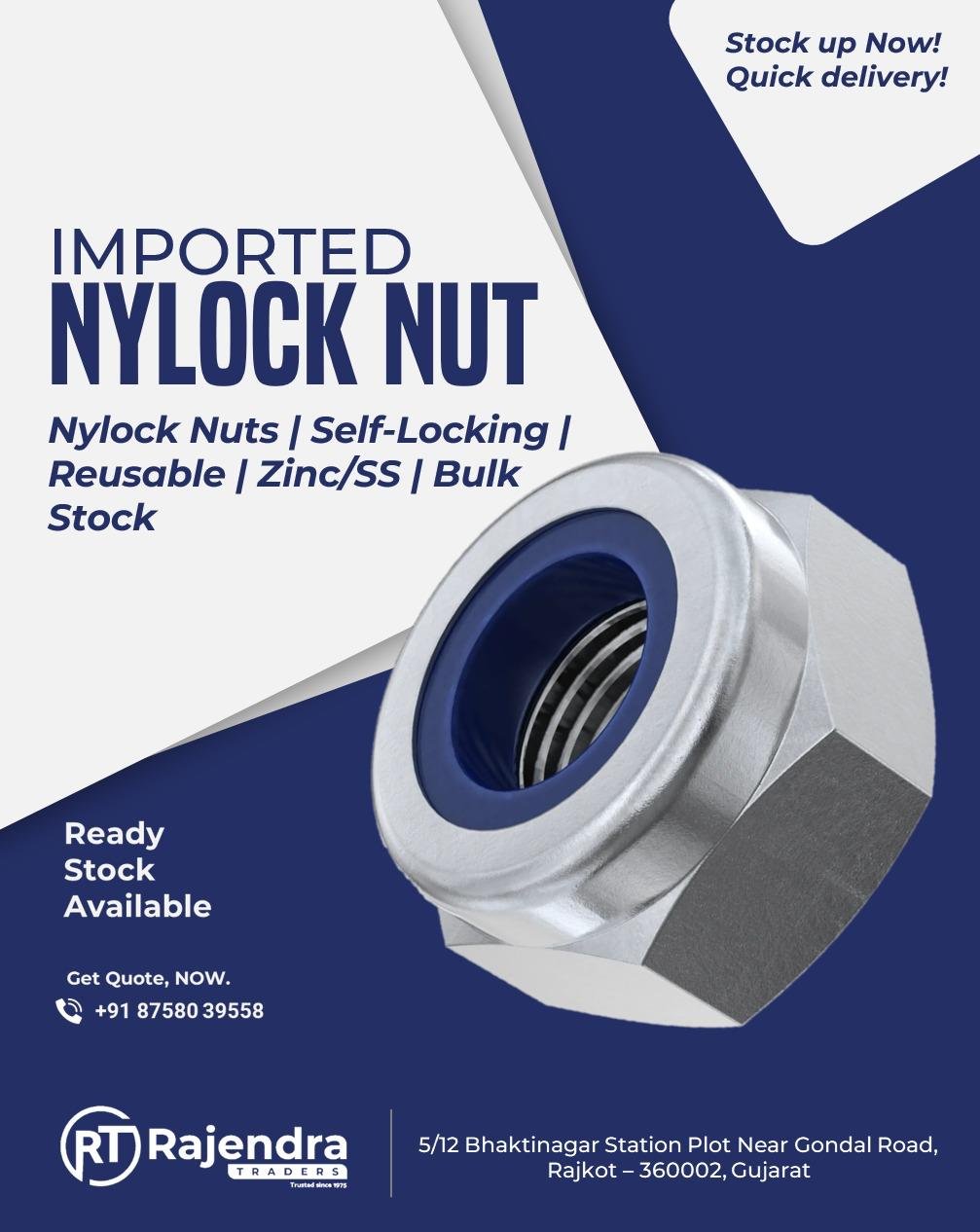
Product Specification :
A Nyloc Nut, also known as a Nylon Insert Lock Nut, is a specialized hex nut that features a captive nylon collar (insert) at the top of the nut. It is designed to be a "prevailing torque" fastener, meaning it resists loosening under intense vibration, shock, or rotation without the need for lock washers or safety wire.
+1
1. Anatomy and Operation
The nut is composed of two primary sections:
The Metal Body: A standard hexagonal nut body, usually made of steel, that provides the structural strength.
The Nylon Insert: A non-threaded ring made of tough nylon or polyimide.
When a bolt is threaded into the nut, it encounters the nylon insert. Unlike the metal threads, the nylon is not pre-threaded; the bolt threads displace the nylon, creating a tight friction fit and "locking" the nut in place by gripping the bolt threads.
+1
2. Material & Strength Grades
Nyloc nuts are graded to match the bolts they secure. Using a low-grade nut on a high-tensile bolt can cause the threads to strip.
Grade/Material Property Class Typical Application
Mild Steel Class 5 / 6 General DIY, furniture, light assembly.
High Tensile Steel Class 8 / 10 Automotive suspension, engines, heavy machinery.
Stainless Steel A2-70 / A4-80 Marine, food processing, and chemical environments.
3. Key Technical Specifications
Prevailing Torque: The amount of force required to turn the nut even before it is seated against a surface.
Temperature Limit: Standard nylon inserts are rated up to 120°C (248°F). Above this temperature, the nylon softens and loses its locking capability.
Head Style: Most are "Standard Pattern" (DIN 985) or "High Pattern" (DIN 982), which features a taller body for more thread engagement.
4. Reusability and Limitations
Reusability: While Nyloc nuts can be reused a few times, their locking efficiency drops with each removal as the nylon collar becomes "threaded" and loses its grip. In safety-critical applications (like aerospace or steering), always use a new nut.
+1
Speed: Because of the prevailing torque, you cannot "spin" these nuts on with your fingers; they require a wrench or socket for the entire installation.
Seizing (Galling): When using stainless steel Nyloc nuts, the friction of the nylon combined with metal-on-metal friction can lead to "galling."
Tip: Use an anti-seize lubricant or slow down the RPM of your power tools.
5. Common Standards
Metric: DIN 985 (Thin/Low Profile), ISO 7040.
Imperial: ASME B18.16.6 (NE and NTE series).
6. Advantages over Alternatives
Feature Nyloc Nut Lock Washer Threadlocker (Liquid)
Vibration Resistance Excellent Moderate High
Ease of Use Single component Two components Messy / Cure time required
Damage to Surface None May scratch paint/coating None
Contact our export experts for detailed specifications, pricing, and shipping information.
Contact rajendra traders