Premium export product by rajendra traders
Product Specification :
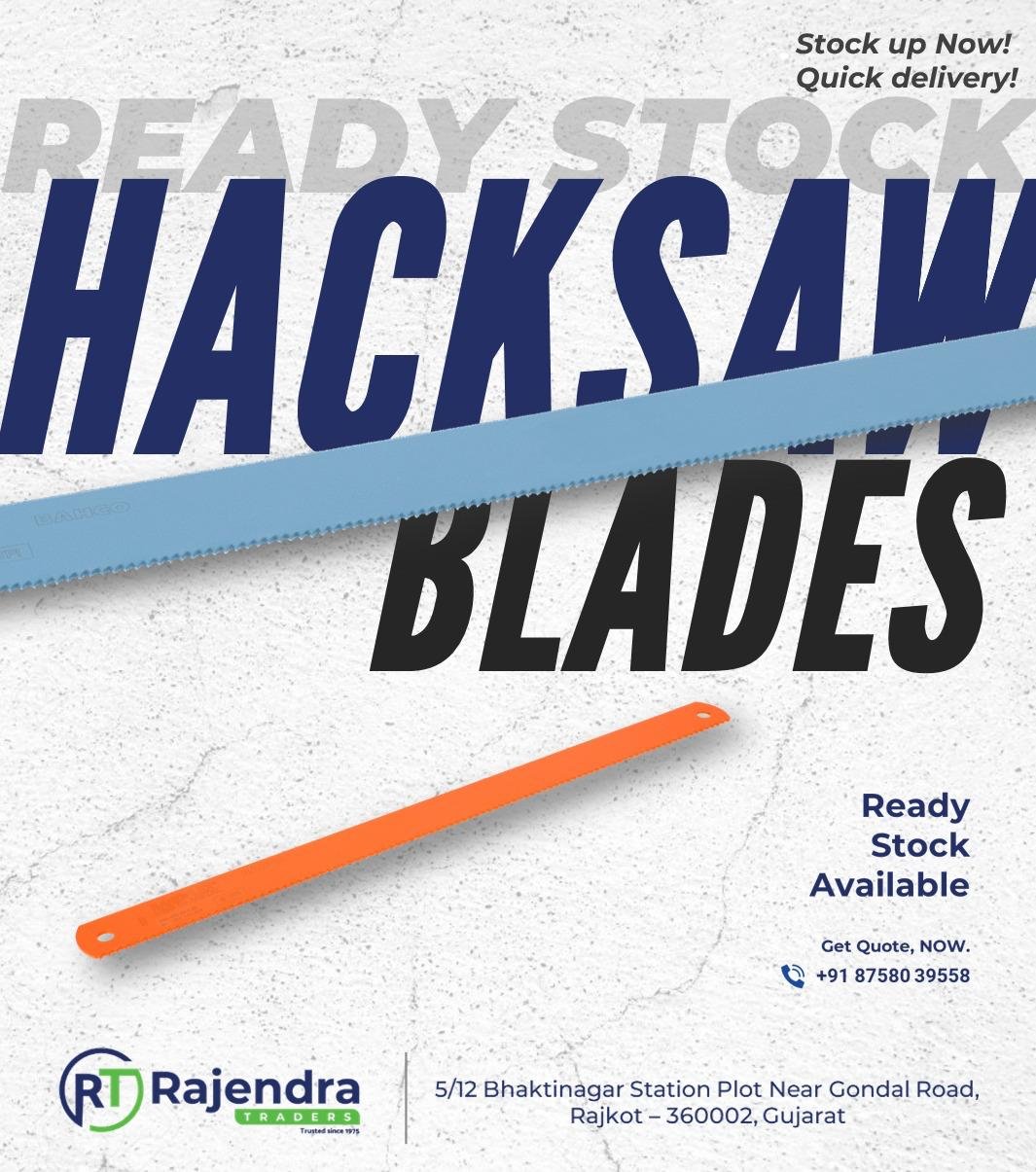
A Hacksaw Blade is a fine-toothed cutting tool designed to be mounted in a hacksaw frame. It is primarily used for cutting metals (such as steel, aluminum, and copper) but is also effective on plastics and hardwoods. The blade's performance is defined by its material composition and tooth density.
+1
The most critical specification for a hacksaw blade is Teeth Per Inch (TPI). Choosing the correct TPI depends on the thickness of the material being cut:
|
TPI |
Application |
Material Thickness |
|
14 - 18 TPI |
Heavy-duty cutting |
Large solids, thick steel bars, and heavy pipes. |
|
24 TPI |
Medium-duty/General |
Medium-walled pipe, angle iron, and aluminum. |
|
32 TPI |
Fine-duty cutting |
Thin sheet metal, tubing, and precision trim. |
Rule of Thumb: At least three teeth should be in contact with the material at all times to prevent the teeth from snagging or stripping.
|
Material Type |
Specification & Performance |
|
Carbon Steel |
Economical and flexible. Best for DIY/soft metals. Dulls quickly on hard steel. |
|
High-Speed Steel (HSS) |
Harder than carbon steel. Maintains a sharp edge longer and resists heat. |
|
Bi-Metal |
Industry Standard. A strip of HSS teeth electron-beam welded to a flexible spring-steel back. Shatterproof and long-lasting. |
|
Tungsten Carbide |
Used for extremely hard materials like ceramics, glass, or hardened steel. |
Contact our export experts for detailed specifications, pricing, and shipping information.
Contact rajendra traders