Product Specification :
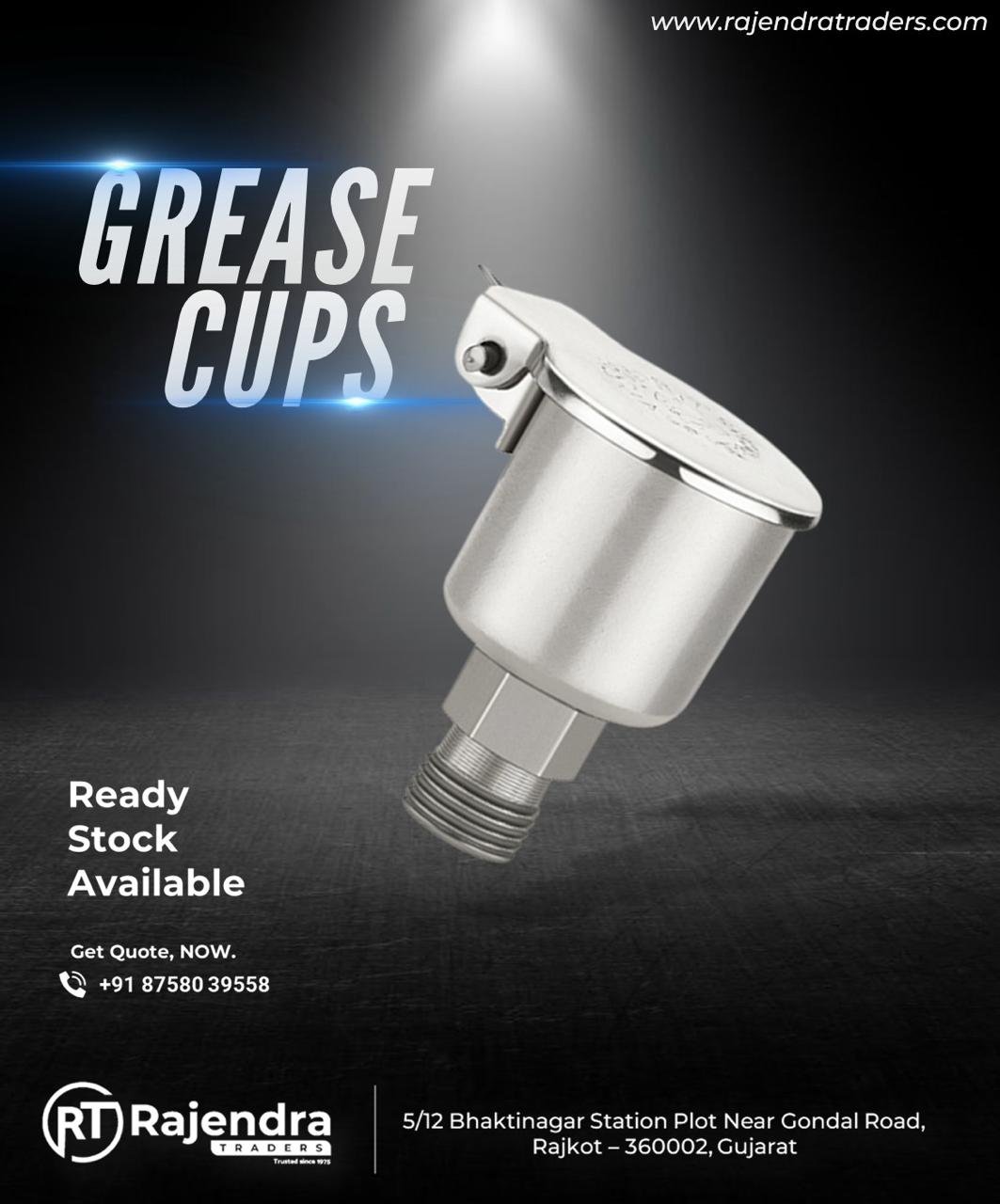
Product Specification: Grease Cups
A Grease Cup is a manual or semi-automatic lubrication device mounted directly onto a machine's bearing housing or moving parts. It serves as a dedicated reservoir to ensure a consistent supply of lubricant, protecting components from friction, wear, and environmental contaminants.
+1
1. Types of Grease Cups
- Screw-Down (Compression) Cups: The most traditional type. Grease is forced into the bearing by manually turning a threaded cap or internal piston.
+1
- Spring-Loaded (Automatic) Cups: Uses an internal spring and plunger to provide a continuous, low-pressure flow of grease over time.
- Button-Head / Ball-Loading Cups: Feature a spring-loaded ball valve. Grease is injected using a grease gun, and the ball seals the cup to prevent dust ingress.
+1
- Drip/Oil Cups: Similar in design but specifically for liquid lubricants, often using a "wick" or "lamp core" to deliver oil via capillary action.
2. Material & Construction
|
Feature
|
Specification
|
|
Main Body
|
Brass (C3604), Mild Steel (Zinc-plated), or Stainless Steel.
|
|
Finish
|
Polished Brass, Nickel-Plated, or Chrome-Plated for corrosion resistance.
|
|
Seals
|
Synthetic Rubber (Buna-N/NBR) or Leather (found in vintage spring-loaded models).
|
|
Transparent Domes
|
High-impact Polycarbonate or Glass (for visual level monitoring).
|
3. Technical Specifications
- Capacity: Commonly ranges from 10cc (small) to 250cc (large industrial).
- Thread Sizes: * Metric: M6, M8, M10, M12.
- Imperial (BSP/NPT): 1/8", 1/4", 3/8", 1/2".
- Operating Pressure: * Manual: Depends on user torque.
- Spring-Loaded: Typically 1 to 5 psi (low pressure to avoid blowing bearing seals).
- Temperature Range: Standard units operate between -10°C and 80°C, though high-temp steel versions can exceed this.
4. Performance Requirements
- Leak-Proof Seal: Must maintain a tight seal at the thread and cap to prevent "bleeding" or environmental contamination.
- Controlled Discharge: For spring-loaded models, the flow rate is often adjustable via a metering valve or by changing spring tensions.
- Vibration Resistance: The cap or adjustment screw must stay in place under machine vibration (often achieved through "knurled" edges or locking springs).