Premium export product by rajendra traders
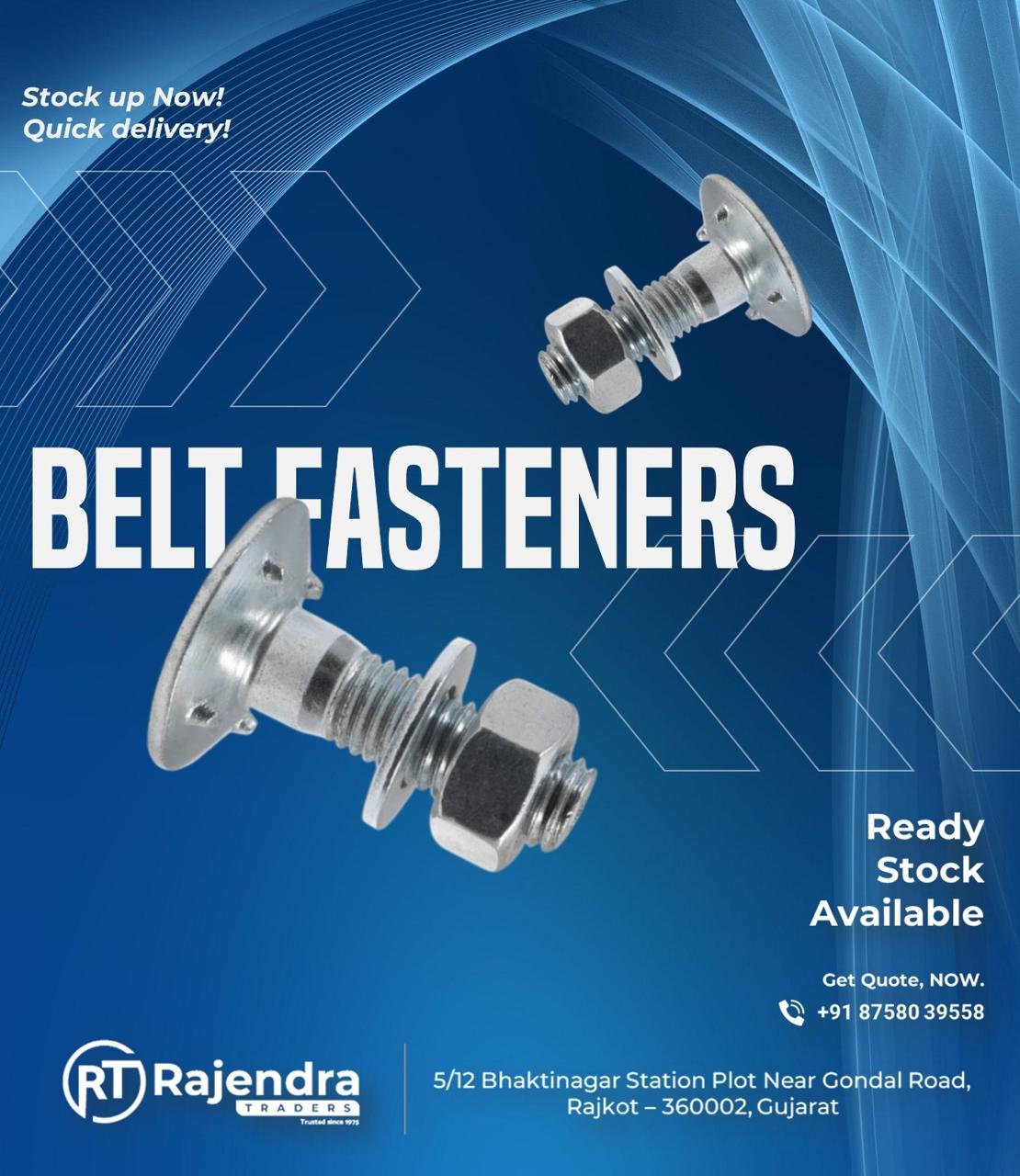
Product Specification :
Product Specification: Mechanical Belt Fasteners
Belt Fasteners are mechanical components used to join the two ends of a conveyor belt together. This process, known as mechanical splicing, is a faster and more versatile alternative to vulcanization (heat-bonding), allowing for quick installation and repair of conveyor systems in mining, agriculture, and manufacturing.
+1
1. Primary Types of Belt Fasteners
The choice of fastener depends on the belt thickness, pulley diameter, and the tension of the conveyor system.
Type Design Best Use
Wire Hook A series of wire hooks pressed into the belt ends. Light to medium duty (packaging, food processing).
Alligator® Lacing A continuous strip of teeth that are hammered into the belt. Low-tension applications with small pulleys.
Bolt Solid Plate Two plates compressed together using high-tensile bolts. Heavy-duty (coal, crushed stone, sand).
Staple Fasteners Plates secured by driving pre-installed staples through the belt. Medium-duty (underground mining, grain elevators).
Bolt Hinged Hinged plates joined by a pivot pin (hinge pin). Applications requiring frequent belt cleaning or length changes.
2. Material Options
Fasteners are manufactured in various materials to suit specific environmental conditions:
Galvanized Steel: Standard for most industrial applications; provides basic rust protection.
Stainless Steel (316): Essential for food processing (FDA compliant) or highly corrosive chemical environments.
MegAlloy® / Wear Resistant: Specialized alloys designed to withstand highly abrasive materials like ore or gravel.
Non-Magnetic / Non-Sparking: Used in recycling centers (near magnetic separators) or explosive environments (grain dust).
3. Key Technical Specifications
Belt Thickness Range: The fastener must be rated for the specific thickness of the belt (e.g., $3\text{mm} \text{ to } 5\text{mm}$).
Minimum Pulley Diameter: Fasteners add rigidity to the belt. If the pulley is too small, the fastener will "stress" the belt, leading to premature failure.
Mechanical Fastener Rating (PIW): Measured in Pounds per Inch of Width. This must exceed the actual operating tension of the conveyor.
Hinge Pin Material: For hinged fasteners, the pin can be nylon-covered steel, stainless steel, or armored cable.
4. Installation Tools
Mechanical fasteners require specific tooling for a secure fit:
Lacing Machines: Used for wire hooks to ensure even pressure.
Hammer/Impact Tools: Used for Alligator lacing and staple-style fasteners.
Templates: Essential for bolt-style fasteners to ensure the holes are spaced perfectly across the belt width.
5. Selection & Installation Best Practices
Squaring the Belt: The most critical step. The belt ends must be cut perfectly square ($90^\circ$ to the centerline). An off-center splice will cause the belt to "track" to one side, damaging the edges.
Skiving: For heavy-duty belts, a portion of the top rubber cover is "skived" (shaved) off. This allows the fastener to sit flush with the belt surface, protecting it from scrapers and cleaners.
Width Margin: Fasteners should be installed slightly narrower than the actual belt width (usually $25\text{mm}$ shorter on each side) to prevent the fastener from catching on the conveyor frame.
6. Advantages vs. Vulcanization
Speed: Mechanical splicing can be completed in minutes; vulcanization takes hours.
Cost: Lower initial cost and no specialized heating equipment required.
Environment: Can be installed in damp or dusty conditions where vulcanization would fail.
Contact our export experts for detailed specifications, pricing, and shipping information.
Contact rajendra traders